What Is Sterile API Manufacturing? Types, Process, and Leading Manufacturers
A fact-based, decision-ready guide covering the definition, types, step-by-step process, regulatory standards, and leading manufacturers in Sterile API Manufacturing.
Sterile API Manufacturing, Defined
Anyone sourcing an injectable, ophthalmic, or parenteral drug ingredient eventually runs into the same question: what is Sterile API Manufacturing, and how is it different from ordinary API production?
Sterile API Manufacturing is the production of Active Pharmaceutical Ingredients (APIs) under conditions that eliminate viable microorganisms, endotoxins, and particulate matter, so the resulting ingredient is safe for direct use in injectable, ophthalmic, or other parenteral drug products. Unlike oral-solid APIs, which are manufactured in conventional clean areas and can tolerate some microbial bioburden, sterile APIs are produced, dried, milled, and packed inside classified clean-room environments — typically Grade A critical zones with Grade B background support.
In plain terms: if a drug is going to be injected, dripped into an IV line, or placed in the eye, the API inside it has to already be sterile, or capable of being made sterile without degrading. That single requirement changes almost everything about how the ingredient is made, handled, tested, and packaged.

Why Sterile API Manufacturing Matters
Sterile APIs sit at the foundation of some of the highest-stakes categories in modern medicine. Because these ingredients bypass the body's normal defense mechanisms, even minor lapses in bioburden control, endotoxin levels, or particulate contamination can cause serious harm.
Injectable Anti-Infectives
Used in hospitals and ICUs, where contamination risk is a direct patient-safety issue.
Oncology Injectables
Many are heat-sensitive and cannot be terminally sterilized without losing potency.
Ophthalmic Formulations
Must be sterile because the eye has no barrier comparable to skin or the gut lining.
Biologics & Complex Injectables
Peptides and lyophilized proteins require specialized freeze-drying under aseptic conditions.
Global regulators — the USFDA, EMA, and WHO among them — apply some of their strictest inspection standards specifically to sterile API facilities, and buyers scrutinize a manufacturer's sterile capability more closely than almost any other part of its operation.
Types of Sterile API Manufacturing
Sterile API Manufacturing is not a single method — it is a family of related techniques chosen based on the chemical and thermal stability of the specific API. Broadly, the types fall into three classification systems.
1. By Sterilization Method — Terminal Sterilization
Applies a sterilization step — typically moist heat, dry heat, or radiation — after the product has already been processed and sealed in its final container. Because sterilization happens last, it gives the highest assurance of sterility, and regulatory agencies including the USFDA treat it as the preferred method whenever an API can tolerate the process. Its main limitation is compatibility: it works well for simple, thermally stable small molecules but is not suitable for heat-sensitive compounds.
By Sterilization Method — Aseptic Processing
Used when terminal sterilization is not feasible because the API would be damaged by heat or radiation. The API, solvent, containers, and all processing equipment are sterilized separately and then combined inside a closed, classified environment — often using isolators — that prevents recontamination during compounding, filtration, and filling. It demands significantly more validation, environmental monitoring, and personnel qualification.
Sterile Liquid / Solution APIs
Dissolved, sterile-filtered through a 0.22-micron filter, and either terminally sterilized or aseptically filled.
Sterile Crystalline Powder APIs
Produced through aseptic crystallization, where the API is precipitated and isolated entirely within a sterile, closed system.
Lyophilized (Freeze-Dried) APIs
Used for heat-sensitive molecules and biologics; the sterile solution is aseptically filled and then freeze-dried in place to remove water while preserving molecular structure.
By Therapeutic Category
Sterile API Manufacturing also segments by end-use category, each with its own technical challenges:
- Sterile antibiotics and anti-infectives (including beta-lactams, carbapenems, and cephalosporins, which often require dedicated, segregated manufacturing lines)
- Oncology and cytotoxic sterile APIs, which need additional containment to protect operators
- Ophthalmic-grade sterile APIs
- Peptides and biologic sterile APIs requiring lyophilization
The Sterile API Manufacturing Process
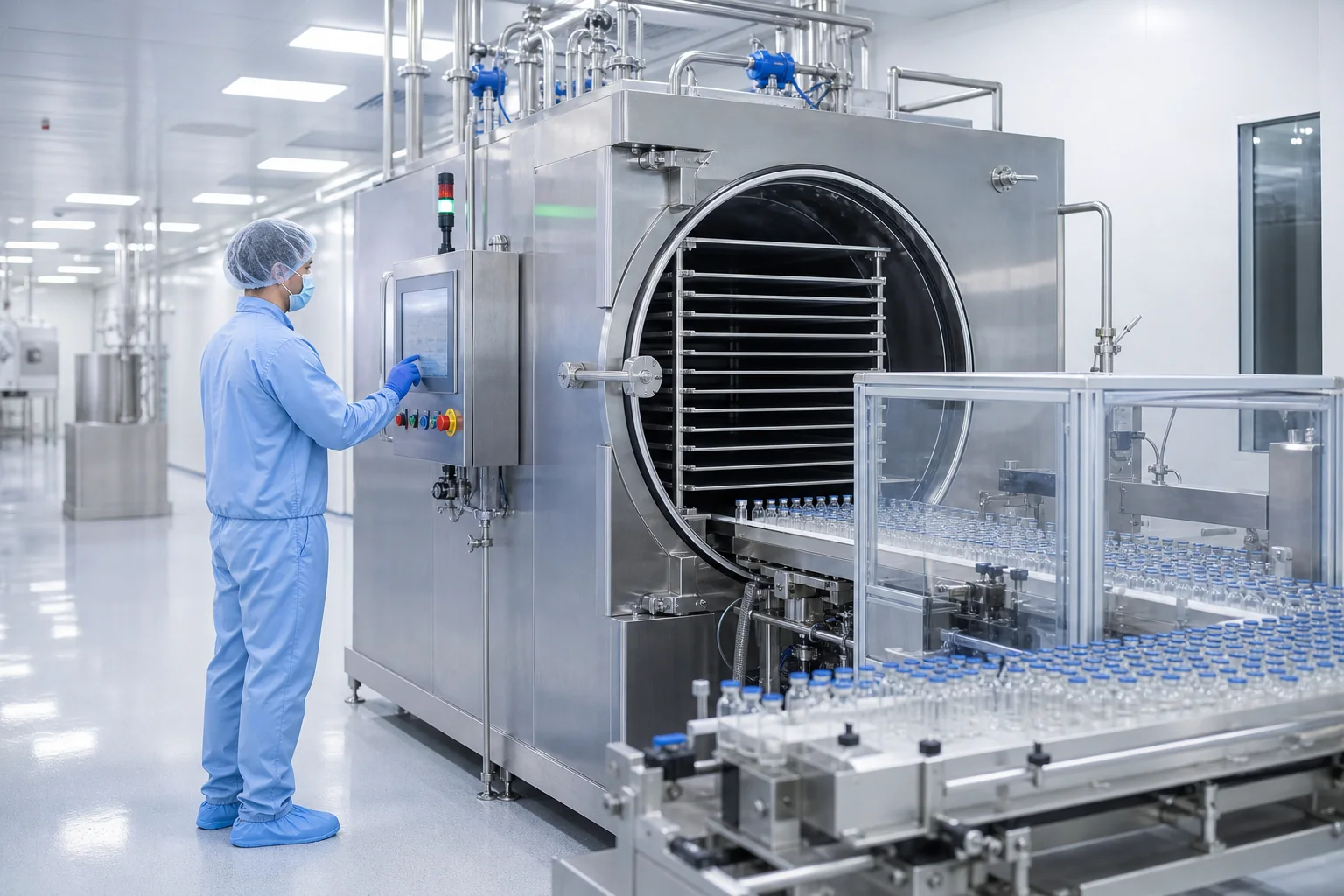
While exact protocols vary by manufacturer and molecule, the core Sterile API Manufacturing process generally follows these stages. Across all of them, the guiding principle is to minimize the risk of microbial, particulate, and endotoxin contamination through facility design, qualified personnel, validated processes, and continuous environmental monitoring, backed by a documented Contamination Control Strategy.
-
1Raw Material Synthesis & Purification
The API is synthesized through standard chemical or fermentation routes and then purified to pharmaceutical-grade purity before it ever enters the sterile manufacturing zone.
-
2Dissolution & Sterile Filtration
The purified API is dissolved and passed through a validated 0.22-micron sterilizing-grade filter, which removes bacteria and other microorganisms while allowing the dissolved API to pass through.
-
3Sterilization Method Selection
Based on the thermal and chemical stability of the API, the manufacturer selects either terminal sterilization (moist heat, dry heat, or radiation) or aseptic processing — a decision made early since it determines the entire downstream equipment and facility design.
-
4Aseptic Crystallization, Drying or Lyophilization
The sterile-filtered API is either crystallized and isolated within a closed, sterile system, aseptically filled and lyophilized (freeze-dried), or filled directly as a sterile solution for terminal sterilization, depending on the desired physical form.
-
5Milling & Micronization (Where Required)
Some sterile APIs need particle-size reduction for downstream formulation. This step, when required, must also occur inside a classified Grade A environment to avoid reintroducing contamination after sterilization.
-
6Aseptic Packaging
The sterile API is packed into its final container — vials, bulk containers, or specialized closures — inside Grade A zones with Grade B background support, using pre-sterilized packaging components and sealing equipment.
-
7Quality Control & Release Testing
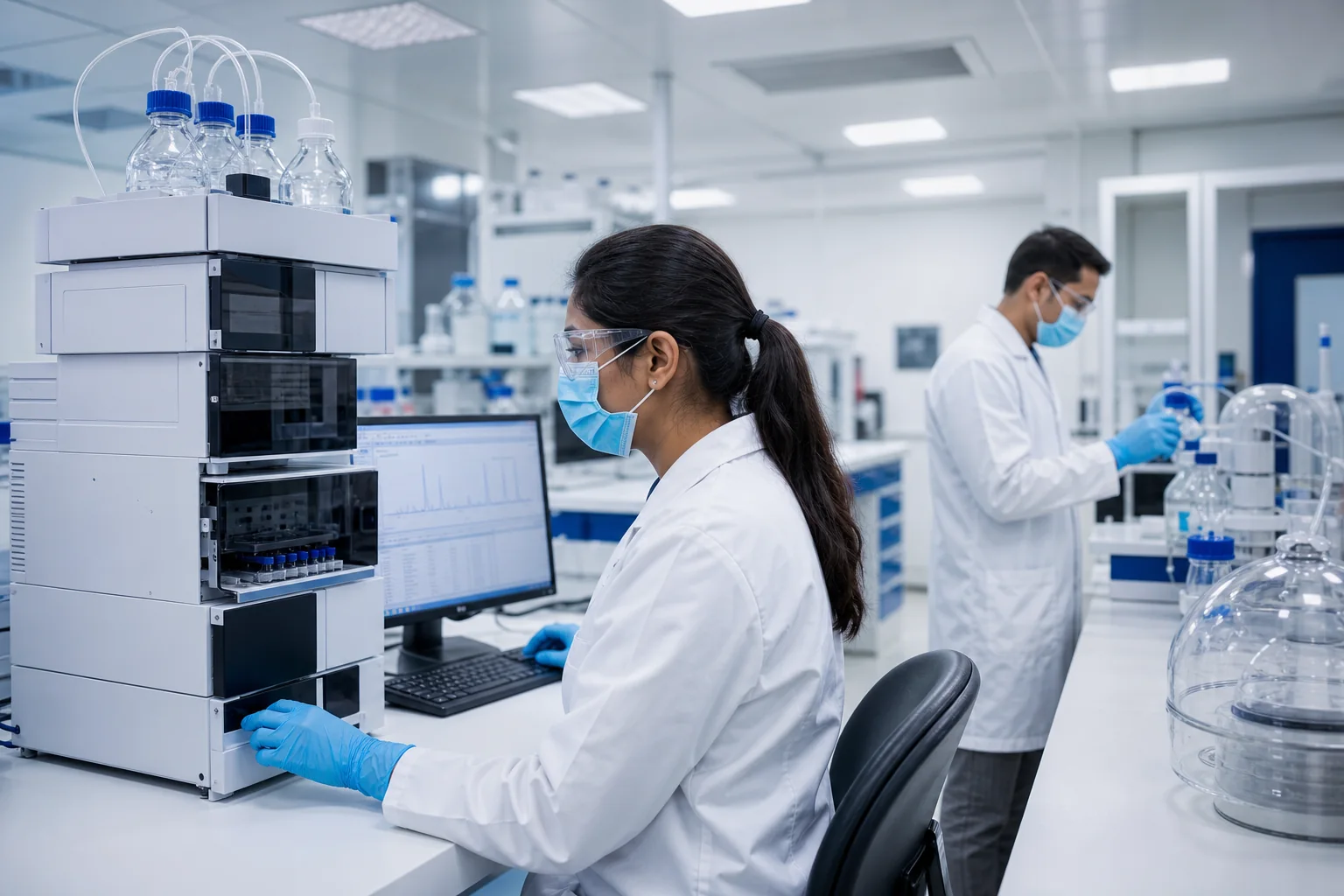
Every batch undergoes sterility testing, endotoxin (bacterial pyrogen) testing, particulate matter analysis, and potency/assay testing before release, with environmental monitoring data reviewed alongside these results.
-
8Documentation & Regulatory Filing Support
Sterile API batches are released alongside complete batch records, and manufacturers targeting regulated markets prepare Drug Master Files (DMFs) or Certificates of Suitability (CEPs) so formulation customers can reference the ingredient in their own regulatory submissions.
Regulatory Standards Governing Sterile API Manufacturing
Sterile API Manufacturing operates under some of the most demanding regulatory frameworks in the pharmaceutical industry:
- Clean-room classification: Processing typically occurs in Grade A critical zones with Grade B background, following standards that specify particulate limits, air changes, and gowning requirements.
- WHO-GMP guidance: States that sterile APIs can be manufactured by terminal sterilization or aseptic processing, with terminal sterilization preferred whenever feasible.
- USFDA expectations: Advises that aseptic processing should be used only when terminal sterilization is not feasible for a given product.
- EU GMP Annex 1: Covers detailed requirements including environmental monitoring, media fill validation, and contamination control strategy documentation.
- DMF/CEP filings: Country-specific filings (US DMF, EU CEP, and equivalents) document the complete sterile manufacturing process for regulatory review.
Any buyer evaluating a Sterile API Manufacturing partner should ask directly about clean-room grade, sterilization method used for the specific molecule, environmental monitoring data, and current DMF/CEP filing status — these four data points reveal more about real manufacturing maturity than a general capability statement.
Leading Sterile API Manufacturers: A Fact-Based Overview
India plays an outsized role in global API supply, and its sterile and injectable-grade API segment has grown alongside rising global demand for hospital and critical-care injectables. Below is a factual look at ten manufacturers active in this space.
1. Divi's Laboratories
A Hyderabad-founded API major with a broad portfolio spanning cardiovascular, anti-infective, and central nervous system APIs, supported by large-scale manufacturing infrastructure.
2. Aurobindo Pharma
A vertically integrated pharmaceutical company manufacturing APIs and finished dosage forms, including injectable and sterile product lines, with a wide global regulatory filing footprint.
3. Sun Pharmaceutical Industries
India's largest pharmaceutical company by revenue, operating an extensive API and formulation base that supports its injectable and specialty portfolios.
4. Cipla Limited
Operating since 1935, Cipla combines long-standing R&D depth with API and formulation manufacturing across respiratory, anti-infective, and injectable categories.
5. Dr. Reddy's Laboratories
A globally recognized manufacturer whose API operations supply both its own formulation business and third-party customers, including sterile and injectable-grade ingredient lines.
6. Akums Drugs & Pharmaceuticals
Known for a broad small-molecule API portfolio spanning beta-lactams, non-beta-lactams, and sterile APIs, with capability in hazardous and high-pressure reaction chemistry.
7. Neuland Laboratories
A Hyderabad-based API manufacturer with over 25 years of cGMP experience, serving customers across more than 85 countries.
8. Sterile India Private Limited
A manufacturer specializing specifically in the development and large-scale production of sterile APIs for injectable formulations, aligned with WHO and international regulatory standards.
9. Vartika Chemicals & Pharmaceuticals
A WHO-GMP certified manufacturer focused on sterile antibiotics, carbapenems, antivirals, and specialty injectable APIs, with disclosed lyophilized and crystalline sterile API capacity.
10. Mac-Chem Products (India)
A manufacturer offering bulk sterile APIs and oncology APIs, with dedicated annual production capacity for sterile categories.
Across these manufacturers, four themes consistently separate strong sterile API suppliers from average ones: regulatory documentation depth (DMF/CEP/USFDA/WHO-GMP), dedicated clean-room and aseptic infrastructure, therapeutic specialization, and reliable export reach across regulated and semi-regulated markets.
What to Look for in a Sterile API Manufacturing Partner — the Bharat Sterile Approach
Bharat Sterile approaches sterile API manufacturing as a category where trust has to be earned through documentation and process discipline, not claimed through marketing. When evaluating any Sterile API manufacturing partner — including Bharat Sterile — buyers should look for the checklist alongside.
This is the same checklist Bharat Sterile applies to its own operations, because in Sterile API Manufacturing, a single documentation gap or contamination event can remove a supplier from a buyer's approved vendor list permanently.
- Clean-room-first design: purpose-built Grade A/B aseptic zones rather than oral-solid facilities retrofitted for sterile use.
- Method-appropriate sterilization: clear evidence of whether terminal sterilization or aseptic processing is used for a specific API, and why.
- Dossier readiness: DMF, CEP, and Certificate of Analysis documentation prepared in a format that supports the buyer's own regulatory filings.
- Environmental monitoring transparency: access to viable and non-viable particulate monitoring data, not just a certificate summary.
- Therapeutic focus: manufacturers who concentrate on specific sterile categories tend to have deeper process control than generalists spreading capacity thin.
Sourcing Sterile APIs for Your Pipeline?
Talk to the Bharat Sterile technical team about aseptic processing, lyophilization capability, and regulatory dossier support for your sterile API requirements.
Frequently Asked Questions
Sterile API Manufacturing is the production of Active Pharmaceutical Ingredients under clean-room and aseptic conditions so they are free of viable microorganisms and suitable for injectable, ophthalmic, and other parenteral drug products.
The two primary sterilization methods are terminal sterilization (sterilizing the sealed final container using heat or radiation) and aseptic processing (sterilizing components separately and combining them in a controlled environment). APIs are also produced as sterile solutions, sterile crystalline powders, or lyophilized powders depending on the molecule's stability.
Terminal sterilization sterilizes the product after it is sealed in its final container and is the regulator-preferred method when the API can tolerate it. Aseptic processing sterilizes the API, container, and closure separately and combines them under controlled conditions, and is used when the API cannot withstand terminal sterilization without degrading.
Lyophilization, or freeze-drying, is used to stabilize heat-sensitive APIs and biologics that cannot be preserved in liquid form, removing water content while protecting the molecule from degradation.
Buyers typically look for WHO-GMP certification, USFDA or EU GMP alignment, an active DMF or CEP filing, and documented environmental monitoring and contamination control programs.
Bharat Sterile focuses on clean-room-first infrastructure, dossier readiness, and a concentrated therapeutic focus on high-demand sterile categories such as anti-infectives and specialty injectable APIs, so that formulation partners can evaluate it against the same benchmarks used for established manufacturers.
Precision, From Molecule to Finished Ingredient
Sterile API Manufacturing is a discipline built on precision: the right sterilization method for the right molecule, validated aseptic environments, and documentation that can withstand regulatory scrutiny. Whether an API is terminally sterilized, aseptically processed, or lyophilized, the objective never changes — a finished ingredient that is completely free of viable microorganisms, endotoxins, and particulate contamination before it reaches a patient. Buyers evaluating manufacturers in this space, from established majors to specialized players, should weigh clean-room infrastructure, sterilization methodology, and regulatory documentation as the real indicators of capability.